


Playing to Win in the Reactive Strength Paradigm
We’re all operating inside a reactive strength paradigm—whether you acknowledge it or not. At Absolute, we don’t ignore it, rationalize it, or outsource it. We are programming to win it—from the inside-out.
Reactive strength isn’t just a complex special strength. It is the limiting constraint on high performance in 2025.
If you cannot assess it, stimulate it, or scale it, then you are not programming to win. You are unintentionally programming biological accommodation and neurological stagnation—and professional. This is how coaches, clinicians, and entire organizations drift into an accommodation-stagnation doom loop without ever realizing it.
The good news: this limiting constraint is solvable. But only if you choose to grow as a programmer. There’s a nonlinear payoff for wrestling with the reactive strength gorilla. Consistent effort makes it quit (trust us)—and when it does, the win is sweeter than anything bullshit linear periodization could ever promise.
The Legacy Definitions Are Limiting Constraints
Louie Simmons was right: desperate men do desperate things. And the field is still desperately clinging to reactive strength definitions from the 1970s—definitions built for a world where connective tissue wasn’t even considered trainable.
We love Medvedyev. A true legend. But he wasn’t programming for reactive strength. He was programming for a different athlete, in a different era, with different demands. Point B was the lift not the internal state of the athletes. You agree that if the context changes, the definition must change with it.
That’s the gap (paradigm) we stepped into.
Understand: The inside-out special strength model didn’t appear out of thin air—it emerged because the old definitions could no longer solve the modern programming problems. We were desperate to win in programming and as a result we got a mental model that allows us to do just that.
The Inside-Out Mental Model of Reactive Strength
Our inside out model of reactive strength is tried and tested—otherwise we wouldn’t have published it. We would not waste your time nor ours. We are publishing this information to not just get you into this same game—but to position you to win this game.
You should know we tried like hell to break the inside-out reactive strength mental model but it just came coming back better, more explanatory, and more predictive. We finally stopped fighting it and fully adopted it in both the clinical and weight room spaces.
Once we started doing Point A assessments with it—the mental model of reactive strength expanded with nuances that generated bits of information that allowed us to solve the reactive strength problems that walked into our business.
Next thing we knew assessing through this Reactive Strength lens the entire programming landscape opened up.
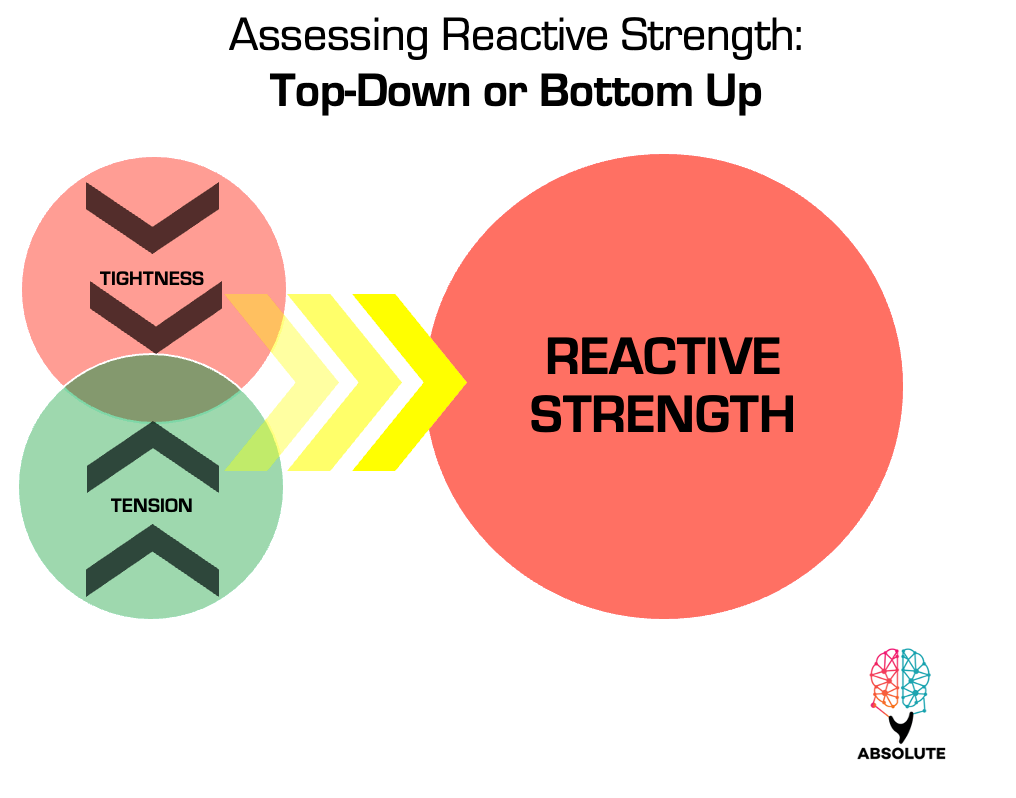
Tightness → specific programming path
Tension → different path
Neither → different path still
Connective Tissue Architecture dysfunction → clear treatment + loading options
Neurological constraints vs biological constraints → immediate clarity
It didn’t just help us “understand” athletes. It unleashed us as programmers.
This is where concepts like:
…emerged from. These weren’t random innovations—they were the natural outputs of tinkering with a mental model built for the athletes and their problems (limiting constraints) of 2026, not the athletes of 1976.

