


Welcome to the monthly roundup for Absolute Sport Science! If you’ve been busy programming treatment and training, analyzing Point A → Point B data, or just busy with the pace of life in 2026, this is your one-stop to catch up on everything we covered in July. We’ve got summaries + links to all our Tuesday written posts and Sunday video deep-dives (exclusive to paid subscribers). This is all our month’s highlights—straight to your inbox.
Whether you’re a free subscriber or a paid member, these recaps are designed to keep you informed and inspired—to keep you getting better at becoming a programming strategist!
Tuesday Posts: Programming Insights
Tuesdays are all about actionable, evidence-based articles to level up your programming knowledge. July was an infrastructure month—we made the case for OIMAs and the reverse hyper as the internal hedges that keep neurology and biology in sync, then extended that same asymmetry to a new case study on the Braves' Ronald Acuña Jr. Here's what we explored:
July 7, 2026: The Conjugate Edge #10: OIMAs—The Hedge at the Edge
Reactive strength volatility isn't fixed by rest—the nervous system recovers in days, connective tissue unloads, so resting only widens the neurological-biology gap instead of closing it.
The hedge is the OIMA: an isometric that stimulates top-down (neurology) and bottom-up (biologically) simultaneously, forcing both systems to sync/conjugate and solve the same problem together.
Same neurological-biological asymmetry shows up when the spine is a limiting constraint.
Which is why we program pendulum-damping (OIMAs) across the entire posterior chain—glutes, hamstrings, multifidus, erector spinae, lats, etc. in our Reverse Hyper Program.
July 14, 2026: The Hidden Layer in Your Point A: Endocrine Function
Endocrine system function is already hiding inside Point A’s Health History pillar (energy, sleep, body comp, stress, meds)—it’s just never been named or tested directly, since blood panels and cortisol testing aren’t practical in most settings.
For athletes training hard but not recovering or adapting, or getting hurt at a rate the programming doesn’t explain, this is the layer to check.
Peptides BPC-157 and TB-500 views as neuroprotective/endocrine lens, not just biological tissue repair.
July 21, 2026: Ronald Acuña Jr’s Season Shows the Link Between ACL and Hamstring Injuries
A prior ACL tear doesn't just heal and disappear—it meaningfully raises re-injury risk on the same leg for years, especially when the graft is hamstring-sourced and never fully recovers its strength. Acuña's 2024 ACL reconstruction, followed by repeated hamstring strains on the same leg, is exactly that pattern playing out in real time. The likely failure: treating the ACL rehab program as a knee problem, then handing him back to general conditioning—an incomplete Point A carried into an incomplete strategy and never getting to Biological Point B.
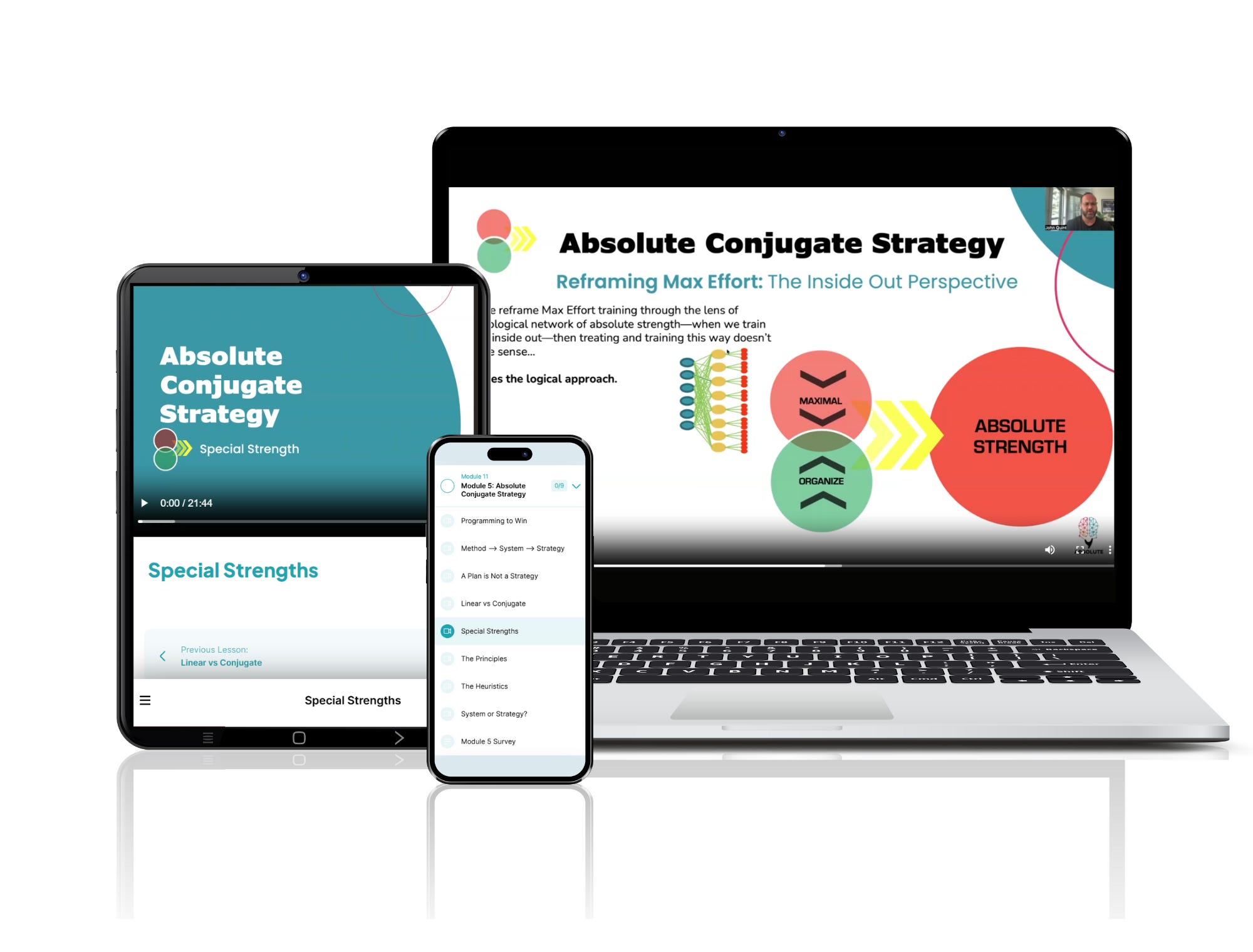
If the Ronald Acuña breakdown made sense, you're already thinking like a programmer—The Art & Science of Programming is where Point A, Point B, and the reactive strength framework get put into your hands as a strategy. Enroll now →
Sunday Paid Subscriber Video Posts
Sundays are reserved for our premium video content—in-depth breakdowns, Q&A sessions, and practical demos that bring the art and science to life. July's run moved region by region—Nabers' toe, the reverse hyper's onboarding sequence, and the elbow—showing the same neurology-outpacing-biology pattern shows up everywhere, not just the usual hotspots. If you're not a paid subscriber yet, these are a great reason to upgrade!
July 5, 2026: Malik Nabers—The Mosquito He Can't Kill
Nabers has never been at reactive strength Point B since high school, and it isn't a talent gap—it's a neurological-biological asymmetry that's gone unframed and unprogrammed for years. His nervous system was already capable of outrunning his tissue's capacity before he reached LSU. The turf toe everyone dismisses as a nagging nuisance is actually the visible symptom of that gap—a top-down output that's permanently outpaced the bottom-up tissue meant to support it. First MTP dysfunction at NFL-receiver force levels carries massive effects up the entire kinetic chain, not just locally.
July 12, 2026: An Update From Absolute—The Reverse Hyper Program, New Merch, and Four Years In
Answers the single most-asked question on how to logically onboard someone onto the reverse hyper. Built on years treating Louie Simmons and working hands-on with the reverse hyper itself, this isn't competing with Louie's original work—it's Absolute's programming layer on top of it which is solving the reactive strength deficit in the spine. Also covers new merch and marks four years of the publication.
July 19, 2026: Pendulum Prerequisites — Why Most People Start the Reverse Hyper 5 Exercises Too Early
The reverse hyper is a six-exercise conjugate sequence, and the pendulum swing everyone knows is exercise five, not one in our programming. Skip ahead and you bring an unresolved deficit to the hardest version of the movement—then blame the machine when it fails. A real case showed the rate-limiting tissue was the sciatic nerve, not the hamstring, proving why the pelvis-hip uncoupling has to happen passively first, before it's ever loaded.
July 26, 2026: The Reactive Strength Deficit Leading Indicator at the Elbow
A generic label like "flexor mass strain" is programming noise—you can't write a set until you know which specific tissue is compromised. The UCL isn't one structure either: its anterior, posterior, and middle bundles tension at different elbow angles, so the "safe" position shifts depending on which bundle is stressed. Key finding: palpating the flexor carpi ulnaris, not imaging, is the fastest read on ligament stress, since its insertion interweaves with the UCL bundles. Two patterns show up in pitchers convinced their UCL is torn—shielding vs. disorganization—and each calls for a different same-day program decision.
Coming Up This Wednesday: Founders Meeting with Jonathan Davis
Mark your calendars—our next Founders Meeting is Wednesday, July 29, at 1:30 PM Eastern. We’ll be sitting down with Jonathan Davis, Florida Football’s Strength & Conditioning and Return to Play lead, for an open discussion with all founding members. Come prepared to participate!
Carry This Into August
Two ways to keep building on what July covered: the Reverse Hyper Program for the spine and tissue work behind “Pendulum Prerequisites,” and The Art & Science of Programming for the reactive strength framework running underneath everything else this month.
Next Founders Meeting
We’ll focus on the programming variable of load with a focus on resistance:
We will go over how the Soviets graded out resistance in the sport of Olympic Weightlifting
Show how that graded resistance was utilized by Louie Simmons in his Westside Barbell Conjugate System
Advance the grading out of resistance for today in 2026 and what that means in programming resistance optimally for not just the athlete but also the special strength that is desired for treatment or training
If you have any other topics worth discussing at a Founders Meeting, leave them in the comments below.
Thanks for being part of Absolute this month—see you next week for more programming insights. If you found value here, share this with a colleague who’s still managing reactive strength instead of syncing it.