


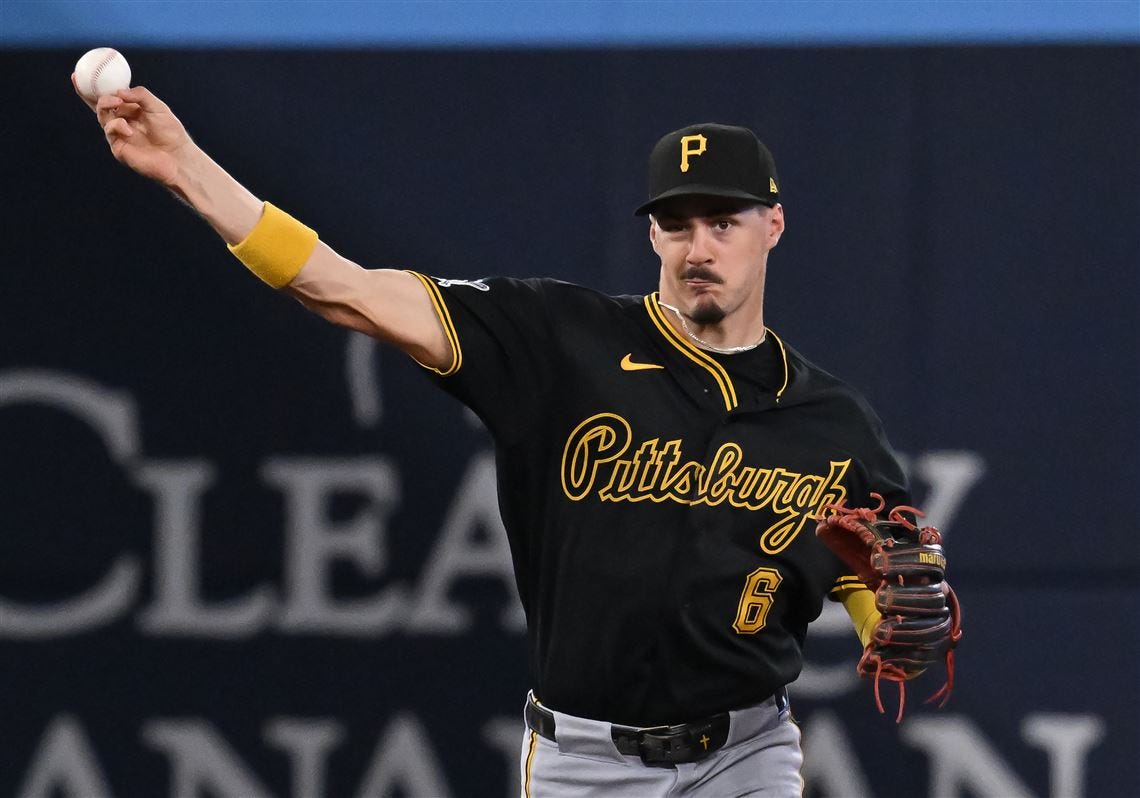
The Pittsburgh Pirates Konnor Griffin is on the DL and for longer than originally anticipated based on the latest outcome of an assessment of his throwing arm.
Griffin initially went on the DL on May 31 with elbow soreness and what was deemed to be a low grade strain of one of his flexors according to the Pirates. During a subsequent road trip, the shortstop visited Dr. Keith Meister who determined the injury required a more specific approach based on its location and the potential impact it may have, if Griffin returned to the lineup too early. As is the case in MLB, the exact muscle tissue affected and the extent to which it is, has not been disclosed. More generally, it has been diagnosed as a flexor mass muscle strain.
This recent information begs the question: what is a flexor mass muscle strain, and what is its relationship to the throwing athlete?
The Flexor Mass
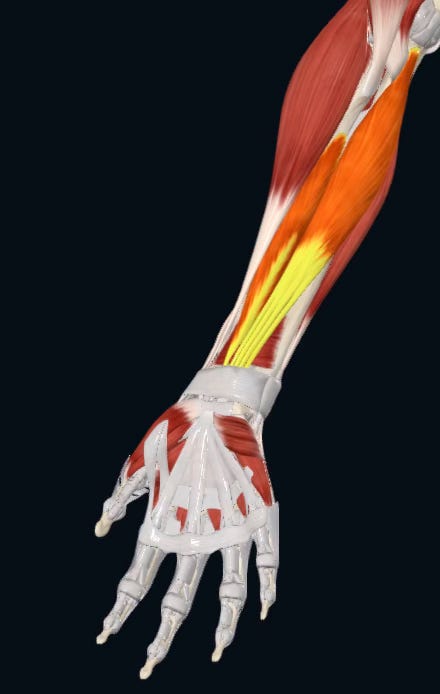
The flexor mass of the arm (more specifically, the forearm flexor mass) refers to the group of muscles on the medial (inner) side of the forearm that primarily flex the wrist and fingers. In throwing athletes (e.g., baseball pitchers, quarterbacks, javelin throwers), this muscle group is critically important for performance, injury prevention, and rehabilitation.
Key Muscles in the Flexor Mass
The muscles of the flexor mass are located proximally from the medial epicondyle of the humerus, as well as the medial elbow joint capsule and thickenings of the capsule referred to as the Ulnar Collateral Ligament. They form a prominent, fleshy mass on the inner forearm.
There are three layers of muscles in the flexor mass.
Layer 1 (Superficial)
Pronator Teres
Flexor Carpi Radialis (FCR)
Palmaris Longus
Flexor Carpi Ulnaris (FCU)
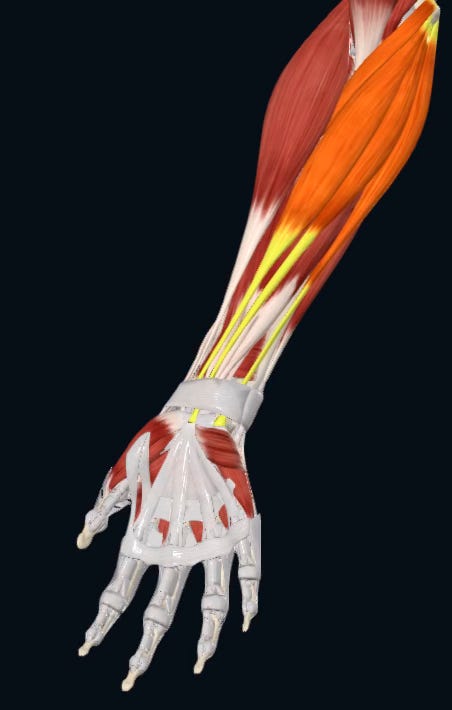
Layer 1, the superficial layer with the Pronator Teres, Flexor Carpi Radialis, Palmaris Longus and Flexor Carpi Ulnaris (left to right)
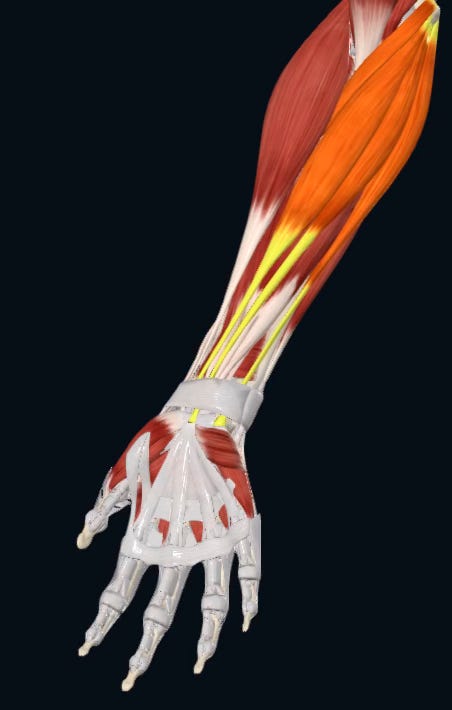
Layer 2 (Intermediate)
Flexor Digitorum Superficialis (FDS)
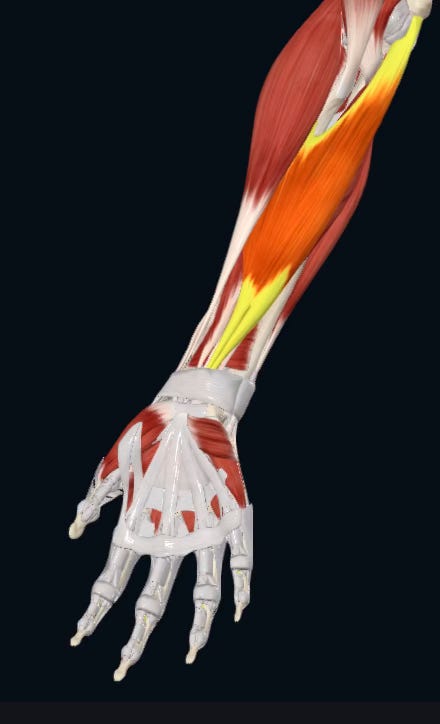
Layer 3 (Deep)
Flexor Digitorum Profundus (FDP)
Flexor Pollicis Longus (FPL)
Role of Flexors in Throwing Mechanics
Throwing, especially high-velocity throwing, places enormous valgus stress on the elbow especially during the late cocking and acceleration phases. During these phases the flexor mass plays several key roles:
Dynamic Stabilization of the Elbow. The flexor-pronator mass acts as a secondary stabilizer against valgus forces that try to open up the inside of the elbow during the arm acceleration phase. This role is highly dependent on the anatomical continuity that exists between the flexors and the elbow capsule and ligamentous system. As a result, there is a dynamic role that occurs to help shield the Ulnar Collateral Ligament (UCL) from bearing excessive forces. As a result, there exists a very important bottom-up reactive strength capacity within these muscles and their associated connective tissues.
Wrist Flexion and Grip Strength. Powerful wrist flexion and finger flexion are essential for ball release and imparting velocity/spin (e.g., fastballs, curveballs, sliders). Strong flexors help “snap” the wrist and maintain grip on the ball.
Deceleration and Eccentric Control After ball release, the flexor mass along with the posterior arm, works eccentrically to slow down the arm and absorb forces, reducing stress on tendons and ligaments. Again, this highlights the need for reactive strength of the flexor mass, specifically towards the right hand side of the Linear Loading Progression
Forearm Pronation Pronator teres and other flexors contribute to pronation, which is a key part of the follow-through phase of throwing and helps reduce elbow stress. More importantly, the ability of the elbow to pronate efficiently comes from the underlying capacity at the elbow joint itself, highlighting the role of joint function in the throwing arm.
The Bulls-Eye
Without the knowledge of the specific details surrounding the case of Konnor Griffin, we at Absolute hypothesize that the specific detail that was found on examination as well as the imaging was located within the Flexor Carpi Ulnaris, which has a large anatomical connection to the UCL.
In this section, paid subscribers will learn: why the FCU is the most likely tissue involved in Griffin's injury, the anatomical evidence linking the FCU directly to the UCL, and what a Reactive Strength-based rehabilitation strategy looks like for the medial elbow stabilizing complex in a throwing athlete.
