


This week we were in State College with the Penn State Football medical and performance staffs. The first slide carried the whole in-service:
The language is programming. Treatment and training, programmed in conjugation—one strategy, one athlete, cumulative multifaceted effects that transfer to the football field.
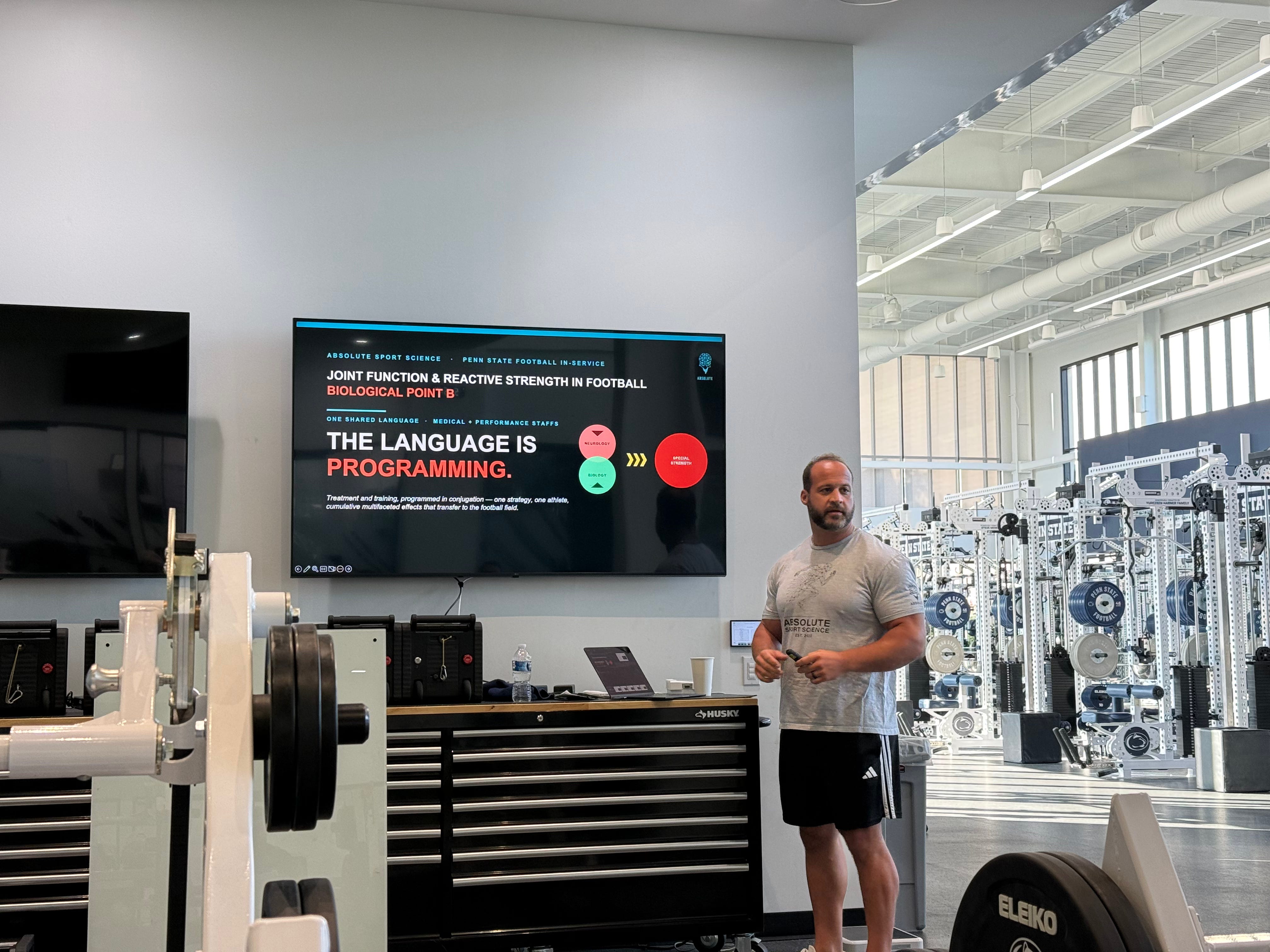
It is the same sentence we carried into the Dominican Republic in August. Different sport. Different building. Same limiting constraint. The full Penn State debrief is coming—there is more to that visit than fits in one essay.
The asymmetry, again
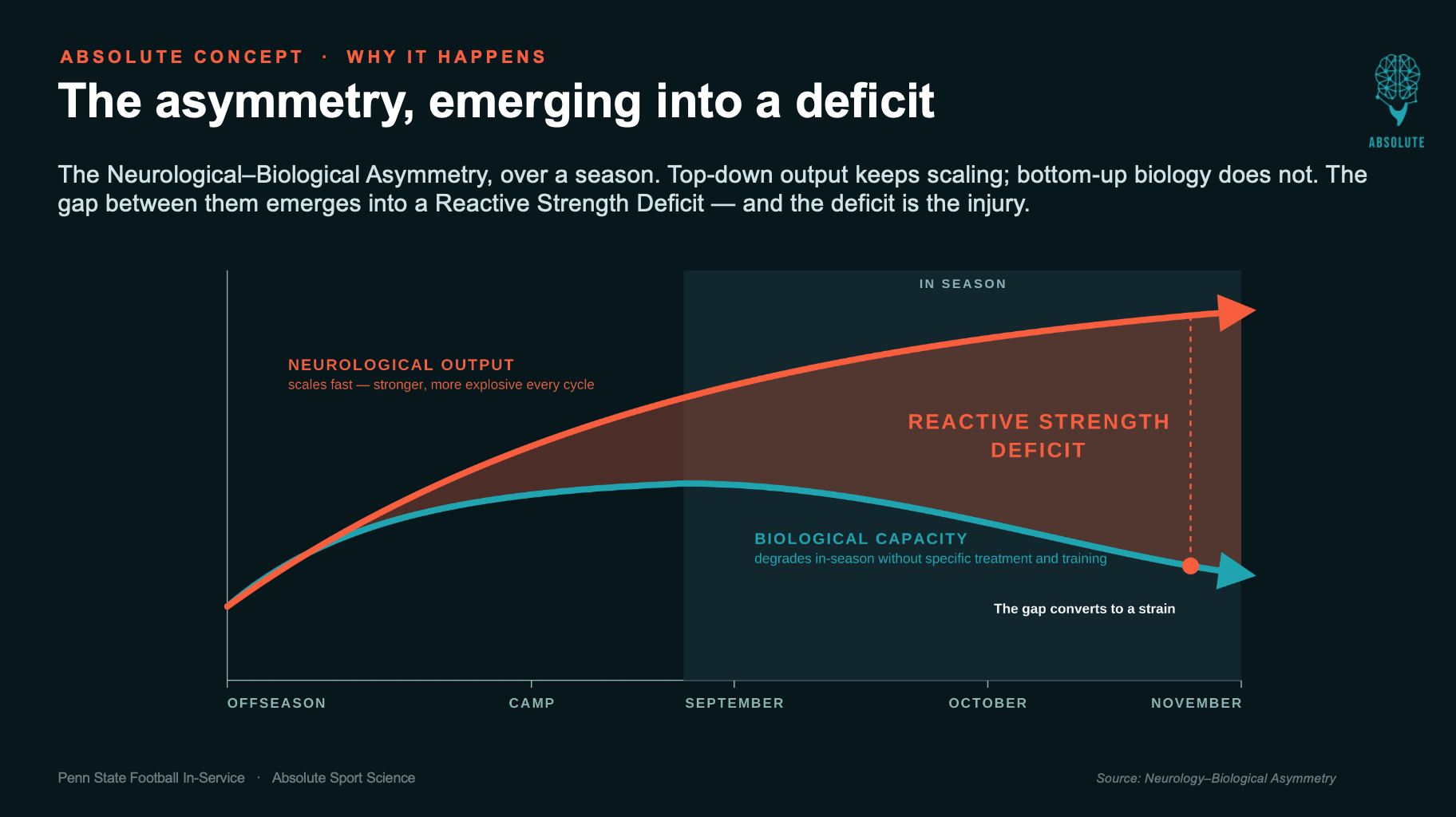
In the offseason, the two halves of the athlete scale together. Then the season starts. The neural network keeps scaling—every heavy session, every sprint, every snap adds output. The connective tissue does not. Without the programming of specific treatment and training, it degrades. Quietly. While the output look fine.
The gap between those two lines is a bottom-up reactive strength deficit. And the deficit is the injury. The hamstring in October. The Achilles in November. Not bad luck—the gap converting into a strain.
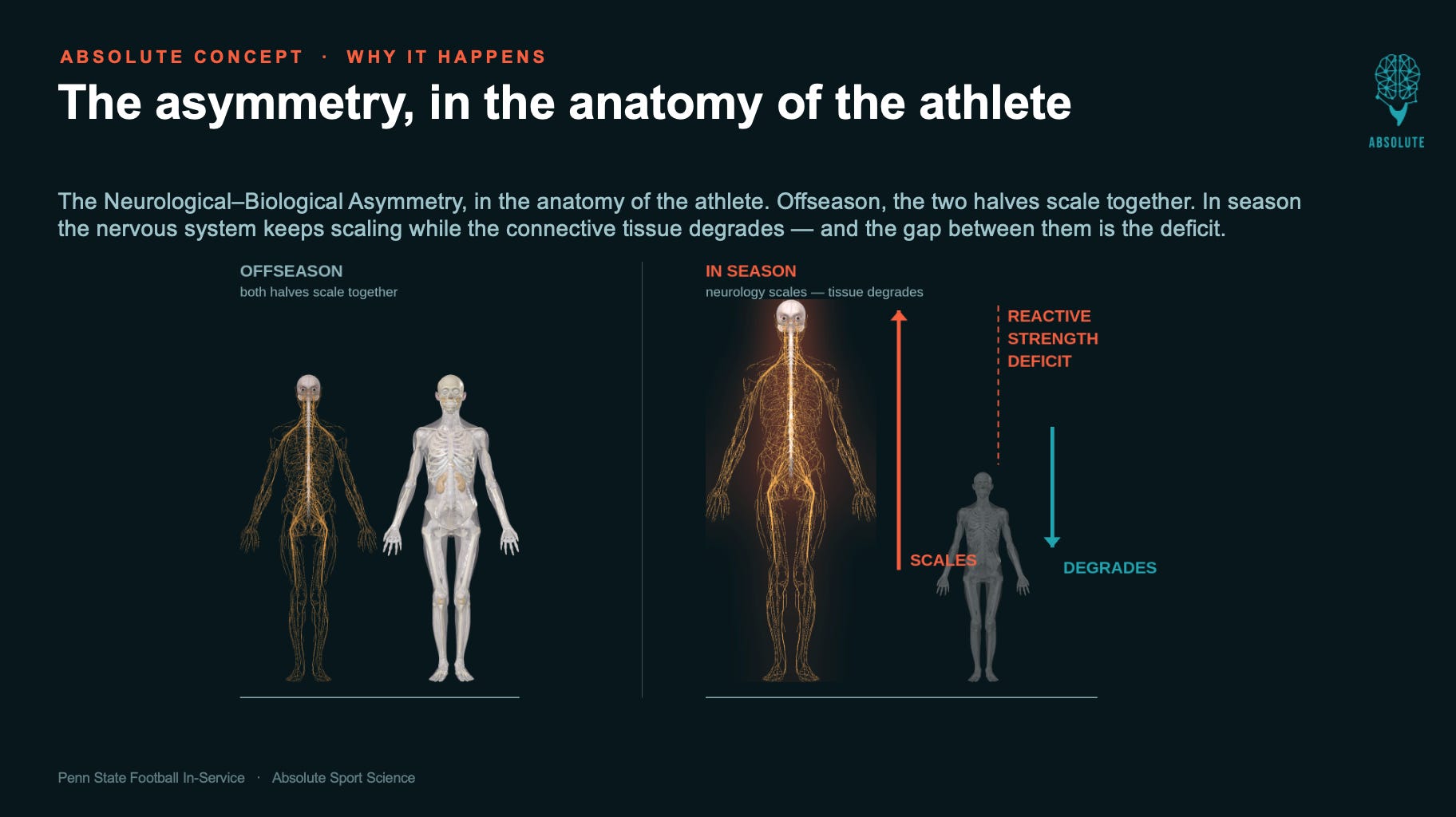
We have written about the neurological–biological asymmetry before. We have also written about the most common answer to it: load management. Or, as we called it then, load mismanagement.
The NBA is the clearest case. Pull the reps, manage the minutes, rest the athlete when the numbers say he is tired. It feels responsible. It is not.
Fatigue is a neurological symptom, not a biological one. The CNS recovers in 24 to 72 hours. Connective tissue does not recover from rest—it detrains without mechanical loading. Rest deloads both halves of the athlete, but only one of them comes back. Neurology recovers. Biology degrades.
So load management does not close the gap. It magnifies it. Repeat that across a season and the athlete steps onto the court neurologically ready to output and biologically compromised to transmit.
Tyrese Haliburton is what that looks like. A calf strain in Game 5, followed by around-the-clock passive care—hyperbaric, massage, dry needling, e-stim, taping. He felt good enough to play Game 7. His Achilles ruptured in the first quarter. Feeling good is not the same as being at Point B.
The answer is not to slow the neurology down. It is to scale the biology with it. Same week. Same strategy. In conjugation.
The in-service laid out the asymmetry. This essay picks up the question underneath it: how do you know which side your work is really training?
How we usually draw Point B
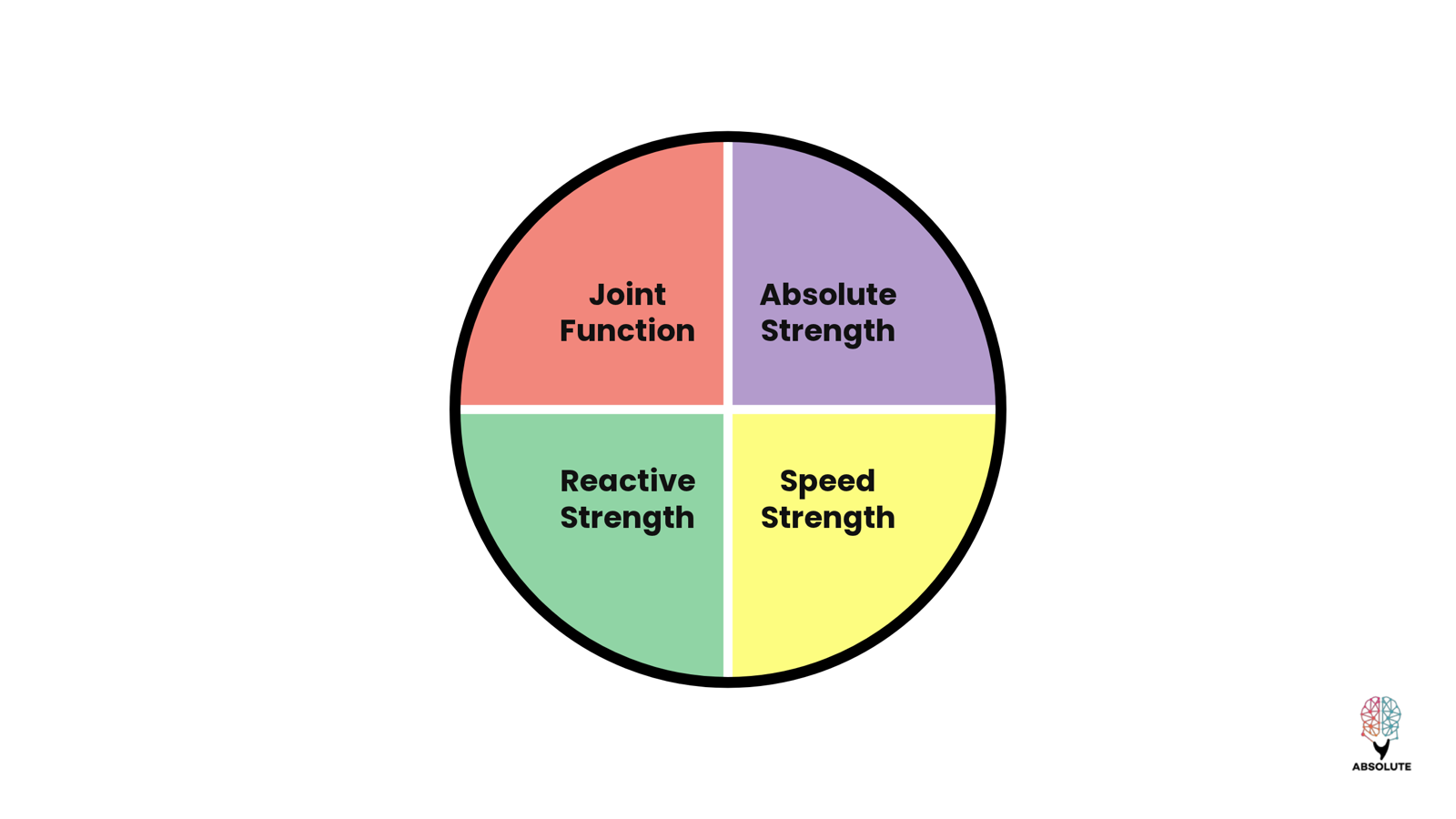
Point B is three special strengths plus joint function—absolute strength, speed-strength, reactive strength, and joint function. Four elements, trained and treated concurrently, with effects that multiply rather than add.
We almost always split it the same way.
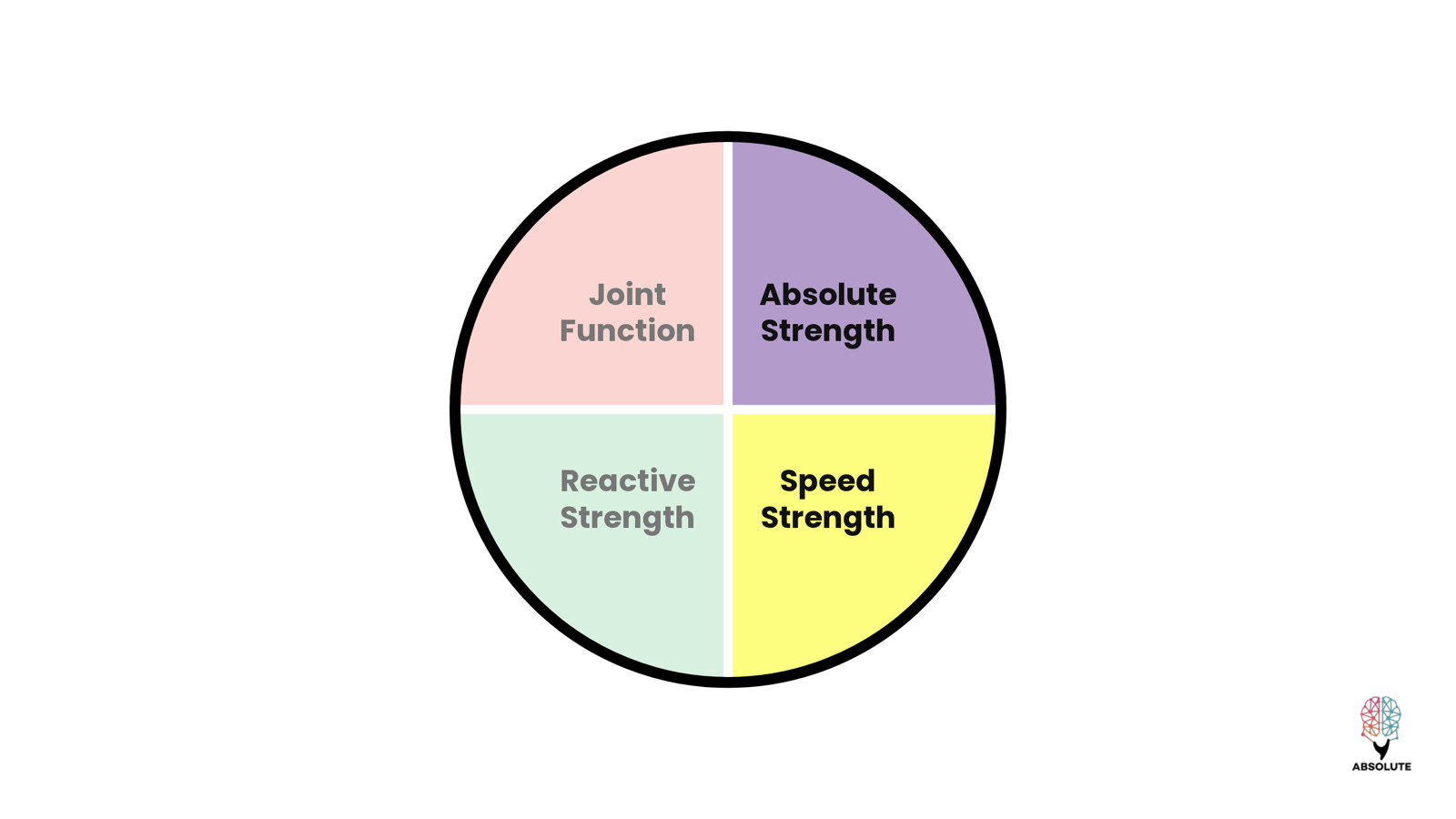
Neurological Point B is two special strengths—absolute strength and speed-strength—sitting on the neural network of absolute strength. Top-down. Primarily the weight room.
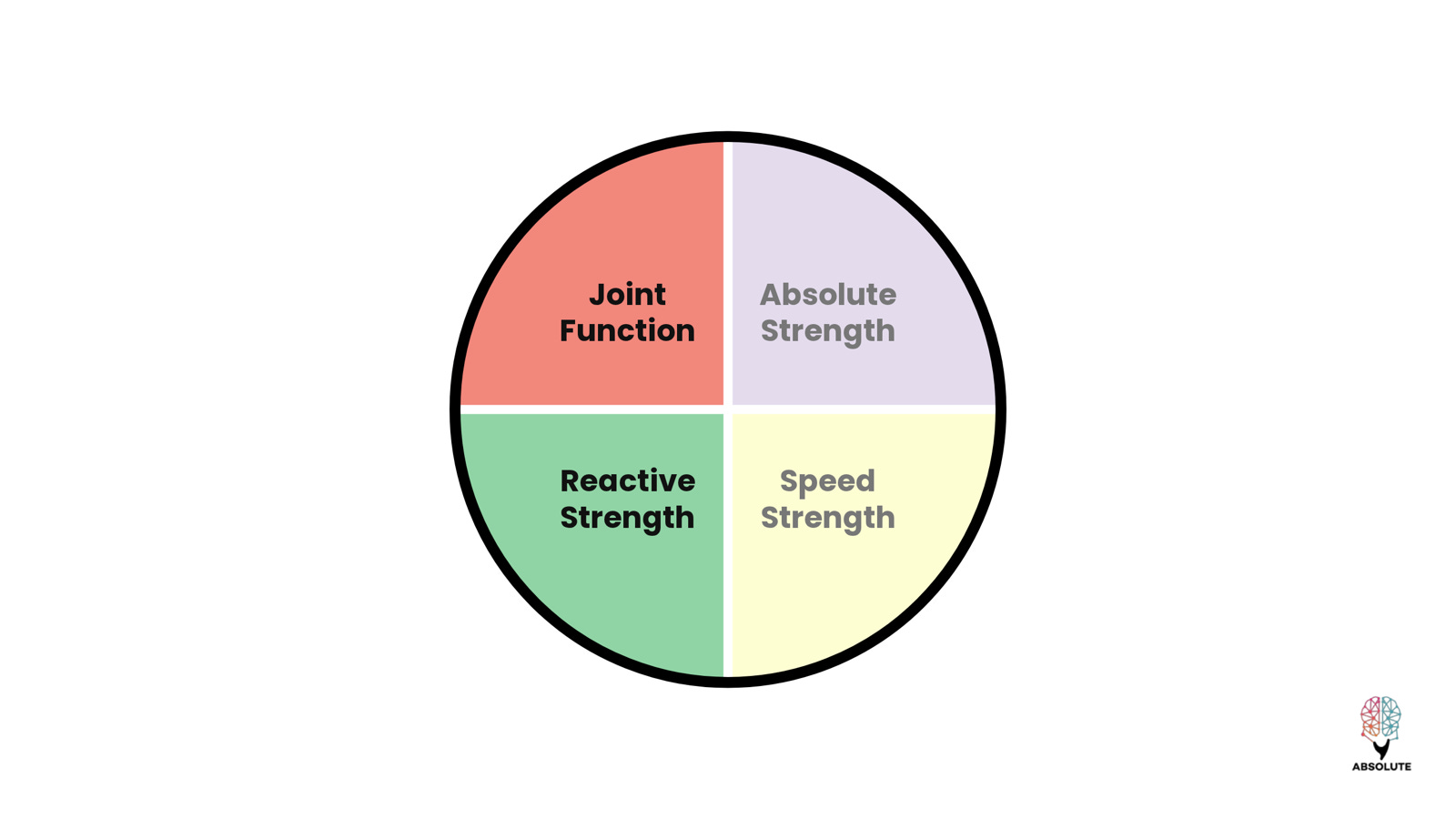
Biological Point B is one special strength plus joint function—reactive strength and joint function. Bottom-up. Primarily the clinic.
That split is correct, and it is useful. It tells you whose ecology is whose. It tells a medical staff and a performance staff where their primary work lives.
Look at the circle again
Now read the same circle by row.
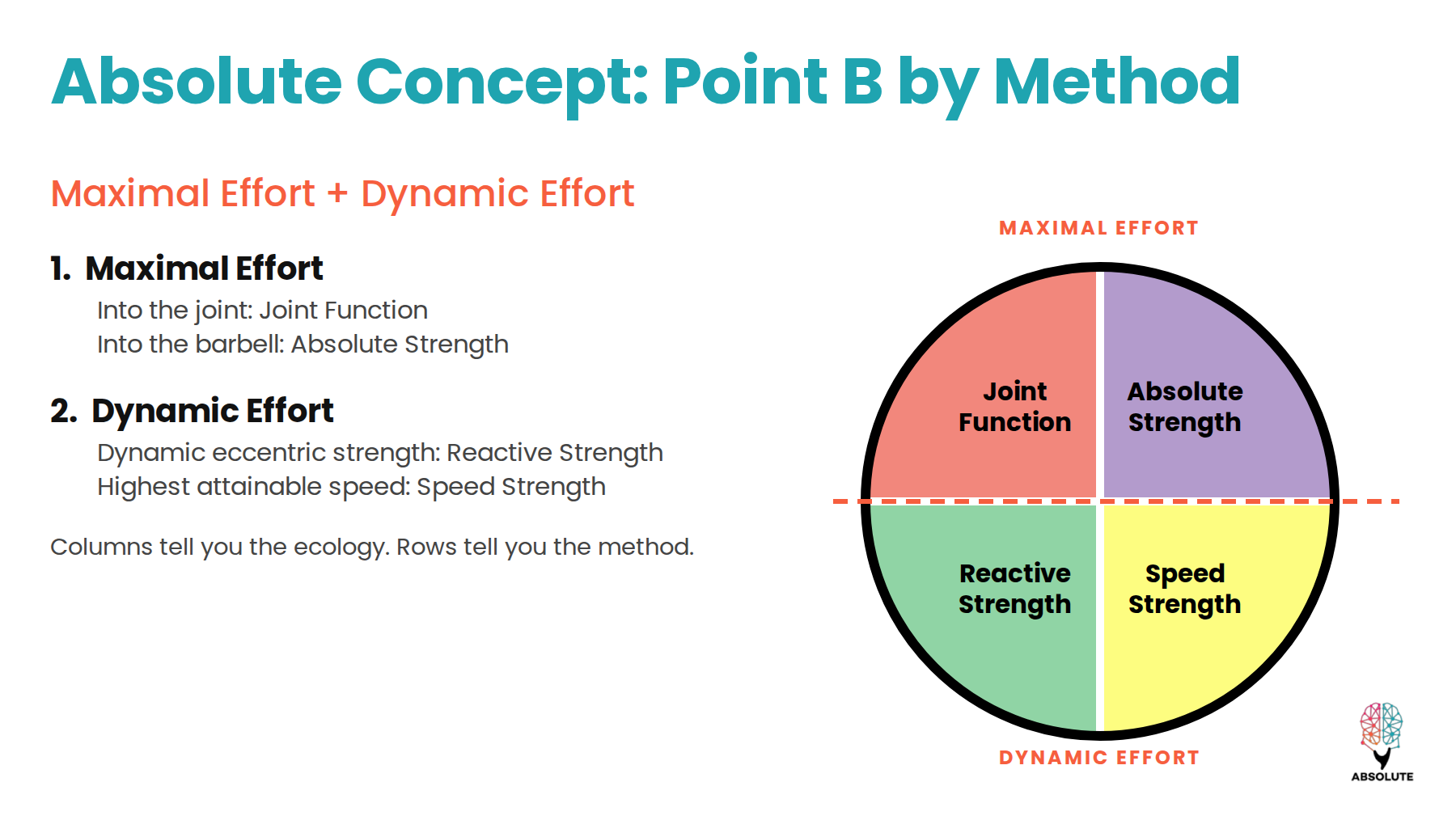
The top row—joint function and absolute strength—is trained with maximal effort. The bottom row—reactive strength and speed-strength—is trained with dynamic effort.
Maximal effort and dynamic effort. The two methods Louie ran in conjugation at Westside. Our strategy extends both methods to the biological side of the athlete, and the circle shows where each one lands.
But the two rows do not behave the same way. On the maximal effort side, the two elements look nothing alike. On the dynamic effort side, they can look identical. That is where intent stops being a nice idea and becomes the whole job.
What’s the intent here?
This is where programmers get lost.
Ask a coach to walk you through a session and you get a detailed answer. The exercise. The load. The sets, the reps, the tempo. What and how. Then ask one more question—well, what’s the intent here?—and the answer often gets thin.
If you cannot name the intent, you cannot name which element of Point B you trained—and you cannot know whether you closed the asymmetry or widened it.
A keen lens of Point B is what lets you break down what you are actually seeing.
In the Dominican Republic we put it this way: you're in the middle of the ocean and you have no idea where you are. Before you can start programming, you need to find out where you are—Point A—and where the island is—Point B—and then create a map to get there.
Intent is the heading on that map. Two athletes can pull the same stroke at the same pace and be rowing toward different islands. If you cannot name the heading, you do not know where the rep is taking them.
Below: how intent changes a maximal effort rep, how the same OIMA trains either half of reactive strength, a reactive strength training max on video, and the five-question intent audit we use before anything goes into a program.
