


Welcome to Installment #12 of The Conjugate Edge. Each month, we publish one essay designed to help programmers in strength and clinical settings step off the linear path and onto our conjugate strategy—one that propagates athletes from Point A→Point B. This is the programmer’s go-to source for the most up-to-date thinking on Conjugate—not as a method, not as a system, but as a living programming strategy that treats and trains concurrently in real time. Want to join the conversation? Become a paid subscriber to access comments and our private chat. Want to go deeper? Check out our online course: The Art & Science of Programming.
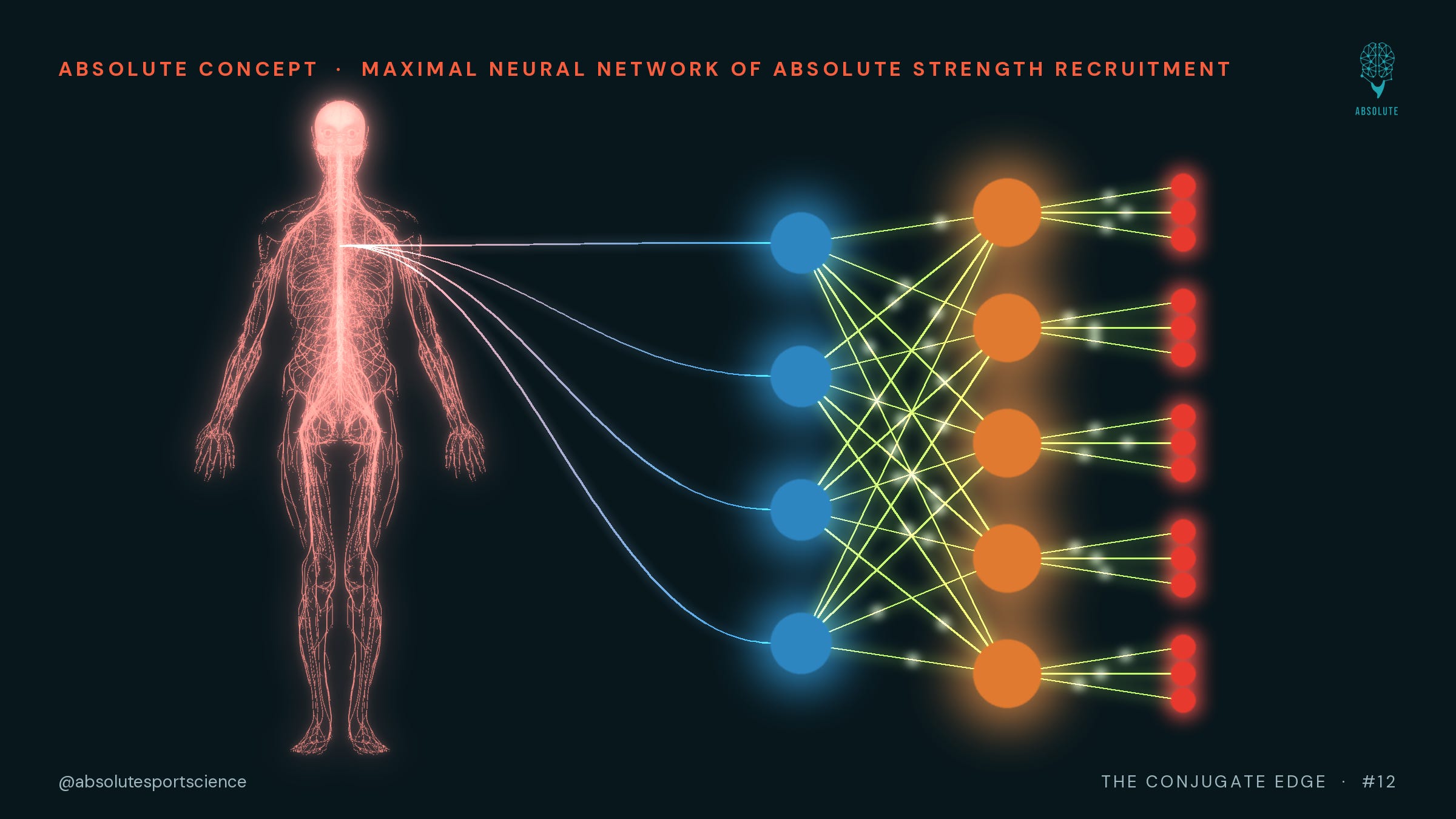
Every strength coach and therapist has heard it from a client: “This is getting boring.” The athlete has done the same isometrics—pressing, holding and damping—two to three times a day for weeks. The effort feels flat and the sessions blur together—because they are. So they change the stimulus.
Sometimes boredom, and the neurological stagnation responsible for its emergence, is the best sign the work is working.
Changing the stimulus is the mistake most strength coaches and therapists make. Not because they lack skill, but because they understand training and not programming.
Training is not programming. The two are different. The Soviets worked out the training methods in the 1960s. It took them until the 1980s to work out programming. In Programming and Organization of Training, Yuri Verkhoshansky defined it as the regulation of the contents of training in accordance with the athlete’s objectives, organized within a specific time frame.1
Training is the work: the methods conjugated with special exercises—like isometrics, the sets and reps. Programming is the regulation of that training (and treatment) work, over time, toward a defined Point B.
You can treat and train connective tissue. But you have to program for reactive strength.
That is the line between a strength coach or therapist and a programming strategist. The strength coach or therapist asks whether the stimulus is still working. The programming strategist asks what the stimulus is for? That one question changes how neurological stagnation is understood.
The programming strategist understands that stagnation is only a failure when the session’s intent is neurological. When the intent is biological, a bored neural network tells you the prompt has been learned and the tissue is now doing the work.
Same athlete. Same flat sessions. Opposite programming decisions.
Point A: The Current Physical State
At Absolute Sport Science, every athlete assessment begins at Point A—the current state of the athlete before any programming is designed.
Health History A lower-extremity joint injury with a prolonged, stalled return. Dynamic activity irritates the joint and fills it with fluid (effusion).
Treatment and Training History Every intervention to date has been subtraction—rest, removing sport practice when the joint flares, anti-inflammatories. Each one slowed the reactive strength deficit doom loop. None of them broke it. Top-down sits a neural network built by years of highly potent neurological training, on bottom-up connective tissue that has never been specifically trained, treated, or even assessed—only scanned (MRI).
History at Level of Competition A high-output athlete who can’t currently sustain competitive volume without the joint flaring. Full neurological expression is also limited.
Below the paywall: what the biological Point B assessment revealed, the roadmap we designed from it, and why we’re holding the programming right now while the nervous system stagnates.
Biological Point B
Biological Point B has two elements, joint function and reactive strength. We assess both, because a joint can articulate cleanly while the tissue around it fails to react optimally—and as a result has a reactive strength deficit.
